
CCTV cameras have become a standard part of security planning for homes, offices, retail spaces, warehouses, and shared residential buildings. While most people clearly understand that CCTV systems are designed to capture video footage, CCTV audio recording remains one of the most confusing and misunderstood aspects of modern surveillance. Some property owners assume that every camera automatically records sound, while others believe audio recording is entirely illegal or technically impossible. These misconceptions often lead to incorrect system choices and unnecessary concerns, particularly when audio features are enabled without a proper understanding of how they work or the legal responsibilities involved.
Understanding whether CCTV cameras record audio goes beyond simple technical curiosity. Audio recording introduces legal responsibility, privacy implications, and ethical considerations that video-only surveillance does not always involve. In certain environments, audio can add helpful context, but in many others, it creates more risk than value. Knowing how audio recording works, when it is appropriate, and when it should be avoided is essential for anyone planning or managing a CCTV system.
This guide explains CCTV audio recording in detail, including how it works, when cameras record sound, the legal boundaries involved, and how to decide responsibly whether audio recording belongs in your surveillance setup.
Do CCTV Cameras Automatically Record Audio?
A very common misconception is that CCTV cameras record audio by default. In reality, most CCTV systems installed for standard security purposes are designed to record video only. Audio recording is not a basic or universal feature and must be intentionally supported and enabled.
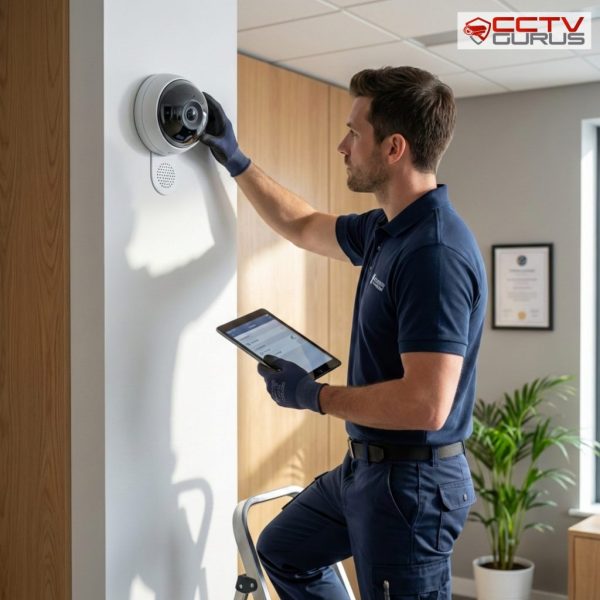
Many cameras simply do not have microphones built into them. Others may include a microphone but ship with audio recording disabled by default. This is done deliberately to reduce privacy risks and legal exposure for users. Even when a microphone exists, audio recording will not occur unless the system is configured specifically to capture sound.
This means the presence of CCTV cameras does not automatically mean conversations are being recorded. Audio recording depends entirely on camera hardware, system settings, and installation choices.
How Audio Recording Works in CCTV Systems
When audio recording is enabled, the system captures sound through a microphone that converts sound waves into digital signals. These signals are then stored alongside video footage or transmitted with the live feed.
Several factors affect how an audio recording actually performs in real environments. Microphone placement, distance from the sound source, background noise, and room acoustics all play a major role. Unlike video footage, which can sometimes be enhanced after recording, poor audio quality cannot easily be corrected.
Audio recording is commonly configured in one of three ways:
- Audio recorded continuously with video
- Audio recorded only during motion events
- Audio is enabled for live monitoring, but not stored
Each method affects storage usage, privacy exposure, and legal obligations differently, which is why audio recording should never be enabled without careful consideration.
Why Audio Recording Is Often Disabled or Avoided
There are strong reasons why audio recording is frequently excluded from CCTV installations. The most significant reason is privacy. People generally accept being seen in public or semi-public spaces, but recording conversations is far more sensitive and often unexpected.
Legal restrictions on audio recording are usually much stricter than those governing video surveillance. In many regions, recording audio without consent is illegal, even if video recording is permitted. This places a heavy responsibility on property owners who enable audio without understanding the law.
Beyond legality, audio recording increases data sensitivity. Recorded conversations may contain personal, confidential, or business-critical information. For many properties, the potential risks outweigh the benefits, making video-only surveillance the safer choice.
Legal and Compliance Considerations You Must Understand
Audio recording laws vary by country and region, but they almost always require more caution than video surveillance laws. In many jurisdictions, all parties involved in a conversation must give consent before audio can be recorded.
In workplaces, audio recording can violate employee privacy rights and labor laws if implemented incorrectly. In residential settings, recording visitors or neighbours without consent can easily lead to disputes or legal action.
Common legal expectations around audio recording include:
- Clear notification that audio recording is active
- Defined purpose for collecting audio data
- Limited access to audio recordings
- Secure storage and controlled retention
Failing to meet these requirements can result in fines, complaints, or the forced removal of the system.
Audio Recording vs Two-Way Audio: Not the Same Thing
Two-way audio is often confused with audio recording, but the two are not the same. Two-way audio allows real-time communication through a camera, such as speaking to visitors or delivery personnel.
In many systems, two-way audio does not store sound at all. Audio is transmitted live and disappears once the interaction ends. This significantly reduces legal and privacy concerns compared to recorded audio.
Two-way audio is commonly used for:
- Communicating with visitors at entry points
- Giving instructions or warnings
- Confirming deliveries or access requests
Understanding this difference helps property owners choose features that provide functionality without unnecessary risk.
Audio Quality Limitations in CCTV Cameras
Even when audio recording is enabled, quality is often limited. CCTV microphones are not designed for professional-grade sound capture. Background noise, echoes, and environmental interference frequently overpower speech.
As a result, audio recordings may be unclear or unreliable as evidence. Audio should never be relied on as the sole source of information in serious incidents. It works best as supplementary context rather than definitive proof. Expecting CCTV audio to perform like professional recording equipment often leads to unrealistic expectations.
Privacy Risks and Ethical Concerns
Audio recording carries higher privacy risks than video surveillance. Conversations may include sensitive personal details or confidential business discussions that individuals never intended to be recorded.
Even when recordings are secure, the feeling of being listened to can hurt workplace morale or residential comfort. Ethical surveillance focuses on protection without creating discomfort or mistrust. If privacy cannot be reasonably protected, audio recording should not be used.
How to Check If Your CCTV System Records Audio
Many property owners are unsure whether their system records sound. The only reliable way to confirm this is by reviewing system specifications and settings.
You can determine audio recording status by:
- Checking camera model specifications
- Reviewing system configuration menus
- Playing recorded footage to see if audio tracks exist
If the audio recording is unclear or undocumented, it should be assumed disabled until verified by a professional.
Best Practices for Responsible Audio Use
If an audio recording is considered necessary, it should be implemented with strict limitations. Audio should only be enabled where it serves a clear, lawful purpose.
Responsible use involves:
- Enabling audio in limited, justified areas
- Informing individuals clearly about audio recording
- Restricting access to audio-enabled footage
- Reviewing compliance regularly
- In most cases, security goals can be achieved without recording sound at all.
When Audio Recording Should Be Avoided Completely
There are environments where audio recording should never be used, regardless of camera capability. These include private offices, meeting rooms, residential living areas, and any space where individuals reasonably expect privacy. In these areas, video-only surveillance protects without violating ethical or legal boundaries.
Conclusion
CCTV cameras do not automatically record audio, and audio recording is not a standard feature in most surveillance systems. While some cameras support sound capture, enabling audio introduces legal, privacy, and ethical responsibilities that must be carefully evaluated. In many cases, video-only surveillance provides effective security without creating unnecessary risk.
A responsible surveillance setup designed by Best CCTV Services in Dubai prioritizes clear video, correct placement, and secure data handling. Audio recording, if used at all, should be limited, transparent, and fully compliant with applicable laws. Understanding how CCTV audio works allows property owners to protect their premises while maintaining trust, privacy, and long-term peace of mind.