
Introduction
CCTV cameras are not one-size-fits-all devices. While many people think of CCTV as a single type of camera mounted on a wall or ceiling, modern surveillance systems include a wide range of camera types designed for different environments, purposes, and security needs. Choosing the wrong type of camera often leads to blind spots, poor image quality, or unnecessary maintenance issues. Understanding the different types of CCTV cameras is essential when planning a reliable surveillance setup, especially as part of a Complete CCTV Installation where every component must work together effectively.
Different properties demand different surveillance approaches. A home may need cameras focused on entry points and shared spaces, while a business may require wide coverage, detailed monitoring, or specialized cameras for challenging environments. Each CCTV camera type exists for a reason, and knowing what each one is designed to do helps property owners make informed decisions instead of relying on guesswork or assumptions.
This guide explains the main types of CCTV cameras, how they differ, and what each type is commonly used for. It is written for beginners who want a clear and practical understanding without being overwhelmed by technical jargon.
Dome Cameras and Their Common Uses
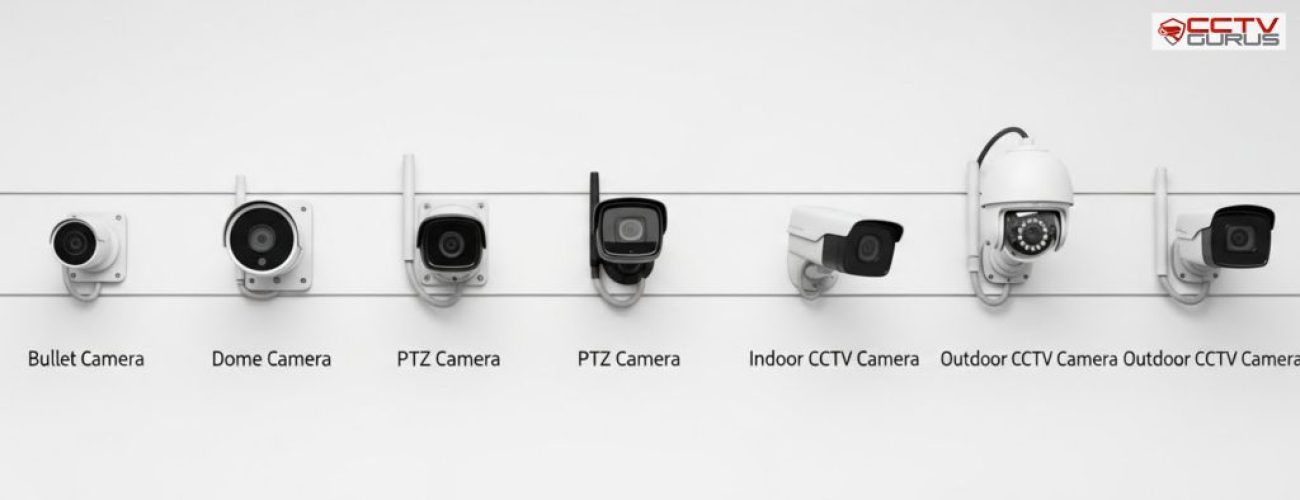
Dome cameras are among the most widely used CCTV cameras in both residential and commercial environments. They are named after their dome-shaped housing, which makes it difficult to determine where the camera is pointing. This design adds a level of discretion and deterrence at the same time.
One of the key advantages of dome cameras is their versatility. They can be installed indoors or outdoors and are commonly used in offices, retail stores, hotels, and residential buildings. Their compact design blends well with ceilings and does not draw unnecessary attention, which is especially important in customer-facing environments.
Dome cameras are also more resistant to tampering. The dome cover protects the lens and internal components, making it harder for someone to interfere with the camera’s direction or damage it easily. This makes them a popular choice for areas where cameras are within reach.
Bullet Cameras and Long-Range Monitoring
Bullet cameras are easily recognizable due to their cylindrical shape. They are typically mounted on walls or poles and are designed to monitor specific directions or distances. Unlike dome cameras, bullet cameras are clearly visible, which can act as a strong visual deterrent.
These cameras are commonly used for outdoor surveillance. Their shape allows for longer lenses, making them suitable for monitoring driveways, entrances, parking areas, and perimeters. When properly positioned, bullet cameras provide focused coverage over longer distances.
However, bullet cameras require careful placement. Because they are directional, incorrect positioning can leave blind spots. They are best used when the monitoring target is clearly defined rather than spread across a wide area.

PTZ Cameras for Active Surveillance
PTZ cameras, short for pan-tilt-zoom cameras, offer active control over camera movement. Unlike fixed cameras, PTZ cameras can rotate horizontally, move vertically, and zoom in on specific areas. This makes them suitable for large spaces that require flexible monitoring.
These cameras are often used in environments such as warehouses, large retail floors, industrial facilities, and open public areas. Operators can adjust the camera view in real time to follow movement or focus on specific incidents.
While PTZ cameras are powerful, they are typically used alongside fixed cameras rather than replacing them entirely. A PTZ camera can focus on one area at a time, whereas fixed cameras provide continuous coverage of multiple zones.
Indoor CCTV Cameras and Their Purpose
Indoor CCTV cameras are designed specifically for controlled environments where exposure to weather and dust is minimal. These cameras focus on monitoring activity inside homes, offices, shops, and shared indoor spaces. Indoor cameras are usually smaller and lighter than outdoor models.
They prioritize image clarity and ease of installation rather than heavy-duty protection. Because lighting conditions indoors are generally more stable, these cameras are optimized for consistent visual performance. They are commonly used in hallways, reception areas, offices, and living spaces where privacy considerations are balanced with security needs.
Outdoor CCTV Cameras for Harsh Conditions
Outdoor CCTV cameras are built to withstand challenging environmental conditions. Heat, dust, humidity, and rain can damage standard cameras, which is why outdoor models include protective housing and sealed components.
These cameras are used for monitoring entrances, building perimeters, parking areas, and external access points. Their durability ensures long-term performance even in demanding climates. Outdoor cameras often include features such as enhanced night visibility and glare handling, allowing them to perform reliably regardless of lighting changes.
Day and Night Cameras Explained
Day and night cameras are designed to operate effectively across varying lighting conditions. During the day, they capture color footage, while at night, they adjust to low-light conditions to maintain visibility.
These cameras are useful in environments where lighting changes frequently, such as parking areas, corridors, and entrances. Without this capability, footage may become unclear during nighttime or poorly lit periods. Day and night cameras ensure consistent monitoring without the need for separate lighting solutions.
Infrared Cameras and Low-Light Monitoring
Infrared CCTV cameras use infrared light to capture images in low or no-light conditions. These cameras are particularly useful for nighttime surveillance where visible light is unavailable. Infrared cameras are commonly used outdoors and in dark indoor areas such as warehouses or storage rooms.
They provide black-and-white footage in darkness, allowing movement and activity to be monitored clearly. While infrared cameras excel in darkness, they are usually paired with standard cameras to ensure full-colour footage during daylight hours.
IP Cameras and Network-Based Surveillance
IP cameras transmit video data over a network rather than through traditional coaxial cables. This allows greater flexibility in system design and remote access capabilities. These cameras are commonly used in modern surveillance systems where scalability and integration are important.
IP cameras support higher resolutions and advanced features such as intelligent detection and remote monitoring. Network stability is crucial for IP camera performance. Proper data networking ensures smooth transmission and reliable recording.
Analog Cameras and Traditional Systems
Analog CCTV cameras represent older surveillance technology but are still used in some installations. These cameras transmit video signals through coaxial cables to a recording device. Analog systems are often found in existing installations where upgrading infrastructure is not immediately necessary.
While they offer basic functionality, they lack many advanced features available in modern systems. They remain suitable for simple monitoring needs but are gradually being replaced by digital solutions.
Wireless CCTV Cameras and Flexible Installation
Wireless CCTV cameras transmit video data wirelessly rather than through physical cables. This makes installation easier in locations where running cables is difficult. These cameras are often used in homes or temporary setups.
However, they still require power, and their performance depends on network stability. Wireless cameras offer convenience, but must be planned carefully to avoid connectivity issues.
Hidden and Speciality Cameras
Hidden cameras are designed to be discreet and blend into their surroundings. They are used in specific scenarios where visible cameras are not suitable. These cameras must be used responsibly and in compliance with privacy laws. Their use is typically limited to special security situations rather than general surveillance.
Choosing the Right Camera Type for Your Needs
Selecting the right CCTV camera depends on the environment, coverage requirements, and security goals. No single camera type suits every situation.
Factors to consider include:
- Indoor or outdoor placement
- Distance and coverage area
- Lighting conditions
- Privacy expectations
- System scalability
Understanding camera types helps avoid mismatched installations and improves overall system performance.
How Camera Types Work Together in a System
A reliable CCTV system usually combines multiple camera types. Fixed cameras provide continuous coverage, while specialized cameras address specific needs. This layered approach ensures complete visibility and reduces blind spots. Each camera type plays a defined role within the system.
Conclusion
There are many types of CCTV cameras, each designed for a specific purpose and environment. From dome and bullet cameras to PTZ, infrared, and IP cameras, understanding these differences helps property owners make informed decisions. Choosing the right camera type ensures clear footage, reliable monitoring, and long-term system performance.
When planned as part of a Complete CCTV Installation, different camera types work together to create a balanced and effective surveillance system. This approach ensures that security needs are met without unnecessary complexity, delivering consistent protection for homes and businesses alike.